



The cryptocurrency market remains extremely volatile in 2026 as well. However, uncertainty doesn’t have to mean only risk – for long-term investors, it can create opportunities to buy higher-quality assets at more favorable prices. Which five cryptocurrencies have the clearest investment story and a chance to survive the next market cycle?
Selecting a cryptocurrency solely based on how much its price has dropped from its all-time high is dangerous. A low price per token or a significant drop doesn’t automatically mean that the asset is undervalued. It’s more important to monitor actual network usage, developer activity, protocol revenues, token economics, and the project’s ability to attract users and capital over the long term.
The following list therefore does not represent a lineup of certain winners for 2026. These are five cryptocurrencies with different levels of risk, backed by relatively strong technology, infrastructure, or specific use cases.
Table of Contents:
- 1. Bitcoin: Nejméně spekulativní sázka ve spekulativním odvětví
- 2. Ethereum: Investice do infrastruktury digitální ekonomiky
- 3. Solana: Sázka na rychlé platby a masové používání blockchainu
- 4. Chainlink: Infrastruktura propojující blockchainy s okolním světem
- 5. Aave: Rizikovější sázka na decentralizované úvěry
- Která z kryptoměn nabízí nejlepší poměr rizika a potenciálu cenu?
- Investovat najednou, nebo nákup rozdělit?
1. Bitcoin: The Least Speculative Bet in a Speculative Industry
Bitcoin remains the best-known and most established cryptocurrency. It doesn’t offer as extensive programming capabilities as Ethereum or transactions as fast as some newer blockchains. However, its investment story is simpler and more understandable for many investors.
One of Bitcoin’s main characteristics is its pre-limited supply. According to its protocol rules, no more than 21 million coins will ever be created. New bitcoins are issued through mining, with the reward for miners decreasing approximately every four years during an event known as the bitcoin halving.
Bitcoin has also significantly moved closer to the traditional financial market in recent years. The U.S. Securities and Exchange Commission approved the trading of spot bitcoin exchange-traded products in January 2024. Investors can thus gain exposure to bitcoin’s price through regulated products without having to buy, transfer, and store the cryptocurrency themselves.
This connection with the traditional financial system is one of the strongest arguments in favor of bitcoin. In the event of further growth in interest in cryptocurrencies, it will likely be among the first assets into which institutional and retail capital begins to flow.
Bitcoin also benefits from the strongest brand, highest liquidity, and longest operational history in the entire industry. Compared to smaller cryptocurrencies, it is also less dependent on a single company, foundation, or narrow group of developers.
However, this doesn’t mean it’s a safe investment. Bitcoin’s price can drop by tens of percent within a few months. Its development is sensitive to interest rates, capital availability, regulation, and investors’ overall willingness to take on risk. The label “digital gold” is therefore not a guarantee that bitcoin will behave as a safe haven during every economic or geopolitical crisis.
Don’t miss: TOP 10 countries with the fastest cryptocurrency adoption
2. Ethereum: An Investment in Digital Economy Infrastructure
While bitcoin is primarily perceived as a store of value, Ethereum functions as programmable infrastructure. Decentralized exchanges, lending platforms, stablecoins, digital asset marketplaces, and tokenized investment products can all be built on its network.
The network’s native cryptocurrency is ether, or ETH. It is used to pay transaction fees, as collateral in decentralized financial applications, and through staking also to secure the blockchain.
Moreover, Ethereum’s development doesn’t end here. Among the protocol’s priorities for 2026 are further increasing the capacity of the main network, expanding data space for second-layer networks, and improving user experience. Developers are focusing, for example, on native account abstraction and simpler cooperation between individual parts of the ecosystem.
Ethereum’s investment argument lies primarily in providing exposure to several trends simultaneously. It can benefit from the development of stablecoins, decentralized finance, tokenization of real assets, and blockchain solutions used by financial institutions.
Ethereum also has an extensive developer community and a large number of applications that are directly or indirectly dependent on its technology. A significant part of the ecosystem consists of second-layer networks that process transactions outside the main blockchain and subsequently settle them on Ethereum.
However, the development of these networks also raises questions. If most activity takes place outside the base layer, it’s uncertain how much economic value will be reflected directly in demand for ETH. Ethereum also faces competition from faster blockchains, and its further development is technologically demanding.
Nevertheless, it remains one of the few cryptocurrency projects with a broad enough ecosystem to potentially function long-term as the fundamental infrastructure of the digital economy.
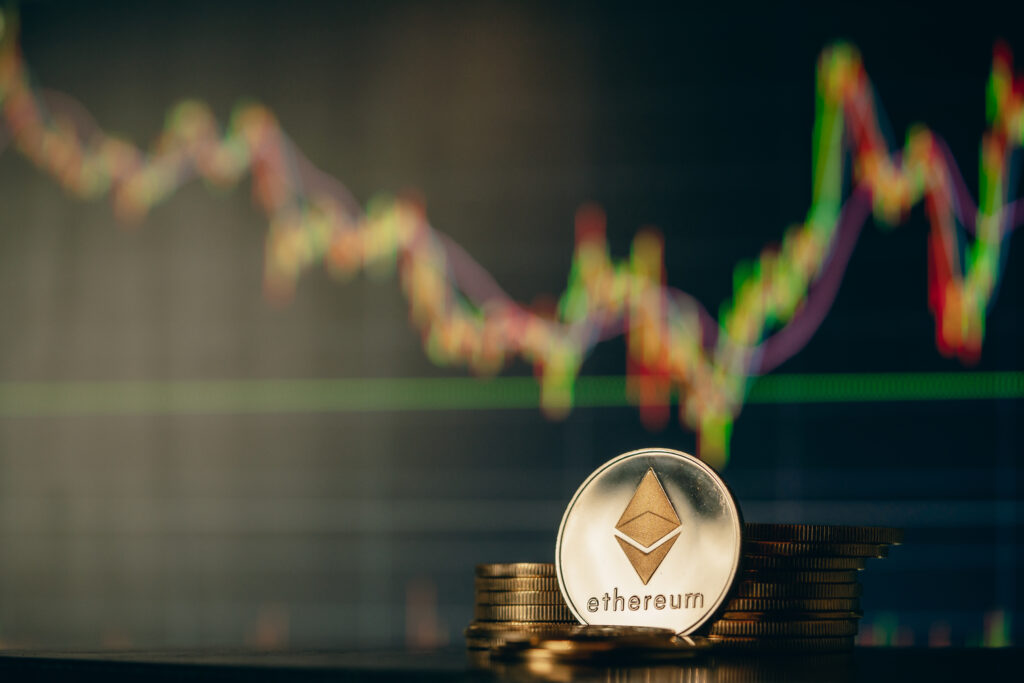
3. Solana: A Bet on Fast Payments and Mass Blockchain Adoption
Solana positions itself as a fast blockchain with low transaction fees. It’s precisely because of this that it’s gaining ground in areas where expensive or slow transactions would significantly limit usability – for example, in stablecoin transfers, trading, digital payments, or running consumer applications.
According to Solana’s documentation focused on payments, the network processed stablecoin transactions exceeding one trillion dollars in value during 2025. Among its advantages are said to be fees lower than one cent, fast transaction confirmation, and the ability to pay fees with various tokens.
A significant theme of 2026 is Solana’s integration into traditional payment infrastructure. According to a June summary of Solana ecosystem development, Mastercard has included the network among supported blockchains for stablecoin payment settlement. The Solana Foundation also highlights the growing volume of tokenized assets and stablecoins on the network. Since this is data published by the foundation itself, it is appropriate to perceive it also as part of its own communications.
Solana is primarily a bet that blockchains will stop being used solely for speculative trading and will increasingly serve everyday financial operations. Low fees can be advantageous for international transfers, micropayments, trade settlement, or automated payments.
The network simultaneously attracts developers of consumer applications and decentralized trading platforms. Compared to Ethereum, it offers a more unified environment where it is not necessary to move assets between a large number of layer-two networks.
However, investing in Solana is riskier than buying Bitcoin or Ethereum. Part of the activity on Solana is associated with short-term trading, memecoins, and other highly speculative products. A high number of transactions therefore does not automatically mean the creation of long-term sustainable economic value.
Solana also has a shorter operating history than Bitcoin or Ethereum. An investor is thus betting not only on the growth of the user base, but also on the network’s ability to maintain long-term stability, decentralization, and security.
Read also: yPredict: Revolutionary platform for cryptocurrency prediction
4. Chainlink: Infrastructure connecting blockchains with the outside world
Blockchain networks have one fundamental problem: they cannot reliably obtain information from the external world on their own. A smart contract, for example, does not know the current price of gold, a stock, a currency, or a cryptocurrency unless this data is provided by an external source.
Chainlink solves this problem through decentralized oracles. These supply blockchain applications with data necessary for the functioning of loans, derivatives, stablecoins, insurance, and other financial products.
Another important part of the project is the Cross-Chain Interoperability Protocol, or CCIP. This enables the transmission of information and transfer of tokens between different blockchains. Chainlink thus does not strive to create one dominant blockchain, but to connect a large number of public and private networks.
This technological neutrality may represent its advantage. Chainlink can theoretically grow regardless of whether the largest part of the market belongs to Ethereum, Solana, banking blockchains, or networks that do not yet exist today. They may all need reliable data and a secure way to communicate with other systems.
The project is simultaneously trying to strengthen the economic role of the LINK token. The so-called Chainlink Reserve uses part of the revenue from the use of on-chain services and enterprise solutions to accumulate LINK tokens. The goal is to create a stronger connection between actual use of the infrastructure and demand for its native token.
Chainlink can profit primarily from the tokenization of traditional financial assets. If banks, exchanges, and asset managers begin converting larger quantities of bonds, funds, stocks, or commodities to blockchain, they will need verified data, information about reserves, and tools enabling communication between different networks.
The biggest risk is the fact that Chainlink’s technological success may not automatically mean the same growth in the price of LINK. The token is not a company stock and its holders have no direct claim to the project’s revenues. An investor must therefore monitor not only the number of integrations, but also whether the use of services actually creates long-term demand for the token.
5. Aave: Riskier bet on decentralized lending
Aave is a decentralized lending protocol. Users can deposit cryptocurrencies and stablecoins into it, earn interest, or borrow additional digital assets against provided collateral. The service operates through smart contracts and does not require a traditional bank or central administrator.
According to the independent analytical portal DeFiLlama, Aave is among the largest decentralized financial protocols by the value of assets deposited in its smart contracts. The platform also tracks the volume of loans, fees collected, protocol revenue, and the value of its treasury.
An important technological step was the launch of Aave V4 on the Ethereum mainnet. The new version uses an architecture known as Hub and Spoke, which separates shared liquidity from individual lending markets. The goal is to increase capital efficiency while enabling more precise risk management.
Aave represents a different type of investment than Bitcoin, Ethereum, or Solana. It is not just a bet on the general growth of blockchain, but on a specific financial service – lending and earning returns from digital assets.
If the use of stablecoins and interest in cryptocurrency-collateralized loans continues to grow, Aave can strengthen its position as a decentralized alternative to some banking services. The smaller market capitalization of the AAVE token also means that in case of success, it may have more pronounced growth potential than the largest cryptocurrencies.
However, this is also associated with substantially higher risk. Aave is dependent on the security of smart contracts, the proper functioning of price oracles, and sufficient value of assets used as collateral. A sharp market decline can trigger extensive liquidations.
Decentralized governance decisions are also a risk. Token holders vote on protocol parameters, supported assets, or the use of financial reserves. An erroneous decision or poor risk assessment could damage not only the token price, but also user confidence.
Which cryptocurrency offers the best risk-to-potential ratio?
Bitcoin, Ethereum, Solana, Chainlink, and Aave do not represent five equivalent investments. Each corresponds to a different level of risk and a different investment scenario.
Bitcoin is the most established and most liquid cryptocurrency. Ethereum represents a bet on the development of smart contracts, stablecoins, and tokenized financial products. Solana offers higher growth potential associated with fast payments and consumer applications. Chainlink can benefit from the need to connect different blockchains and provide them with reliable data. Aave is the riskiest bet on the further development of decentralized lending.
Generally speaking, the smaller the project, the higher its potential return may be – but also the probability of a deep or permanent decline. A cryptocurrency that has lost 80 percent of its value can easily lose another 80 percent.
An investor should therefore not only monitor the price. Also important is the actual use of the network, the number of active users, protocol revenues, the method of token distribution, project security, and whether there is a clear connection between the success of the technology and the value of the cryptocurrency.
You might like: Bitcoin waits for the Fed
Invest all at once, or split the purchase?
Given the high volatility, it may make sense to split a planned investment into several smaller purchases. Regular investing limits the risk that an investor will put in all funds just before a short-term decline.
However, this strategy does not protect against selecting a low-quality asset. If a project loses users, technological advantage, or economic significance in the long term, regular purchases may only increase the overall loss.
Cryptocurrencies should therefore constitute only such a portion of a portfolio whose significant decline will not threaten the investor’s financial stability. With smaller tokens, it is necessary to count not only on normal price fluctuations, but also on the possibility of losing most of the invested capital.
The year 2026 may offer interesting investment opportunities. At the same time, however, it confirms that the popularity of blockchain alone is not enough. The projects with the greatest chance of success are those that can combine quality technology, actual use, security, and a long-term sustainable economy.

