



Tensions in the Middle East are beginning to affect not only oil prices but also the functioning of cryptocurrencies. Iran according to reports from the Financial Times is considering introducing an unconventional fee system for ships passing through the strategic Strait of Hormuz – some of them would have to pay in BTC.
Article Contents:
BTC Instead of Dollars? Iran Tests New Model
According to available information, the measure would apply to selected ships transporting oil. They would have to pay a fee of 1 dollar per barrel – not in American currency, but in Bitcoin cryptocurrency.
Conversely, empty tankers would be able to pass through the strait without any fees. Iranian authorities also plan to individually examine each vessel to ensure it is not transporting weapons. The entire process is meant to be extremely fast – after approval, ships would have only a few seconds to complete the payment.
The use of BTC has a key advantage according to Iranian officials: transactions are not easily traceable or subject to seizure under international sanctions.
You Might Be Interested In: How to Choose the Right Exchange for Trading Your Cryptocurrencies?
Two-Week Ceasefire and Opening of Key Route
The plans come shortly after former US President Donald Trump announced the achievement of a two-week ceasefire between the United States and Iran. The agreement is also to include the immediate and secure opening of the Strait of Hormuz, one of the most important transportation arteries for global oil trade.
The Iranian side has also presented a ten-point plan that includes, among other things, demands for maintaining control over the strait and lifting sanctions.
Before the ceasefire was reached, the situation in the region had been tense – following US-Israeli strikes on Iranian targets in February and March, ship passage was restricted. This led to a significant increase in oil prices, which exceeded the 100-dollar-per-barrel mark for the first time in four years.
Crypto Market Reacts: Volatility Increases
Geopolitical tensions quickly spilled over into cryptocurrency markets. Bitcoin’s price has fluctuated between 65,000 and 75,000 dollars in recent days, reflecting investor uncertainty and increased interest in alternative financial instruments.
Such fluctuations are nothing unusual in times of crisis – cryptocurrencies are often perceived as a potential “safe haven,” but they also react sensitively to global events.
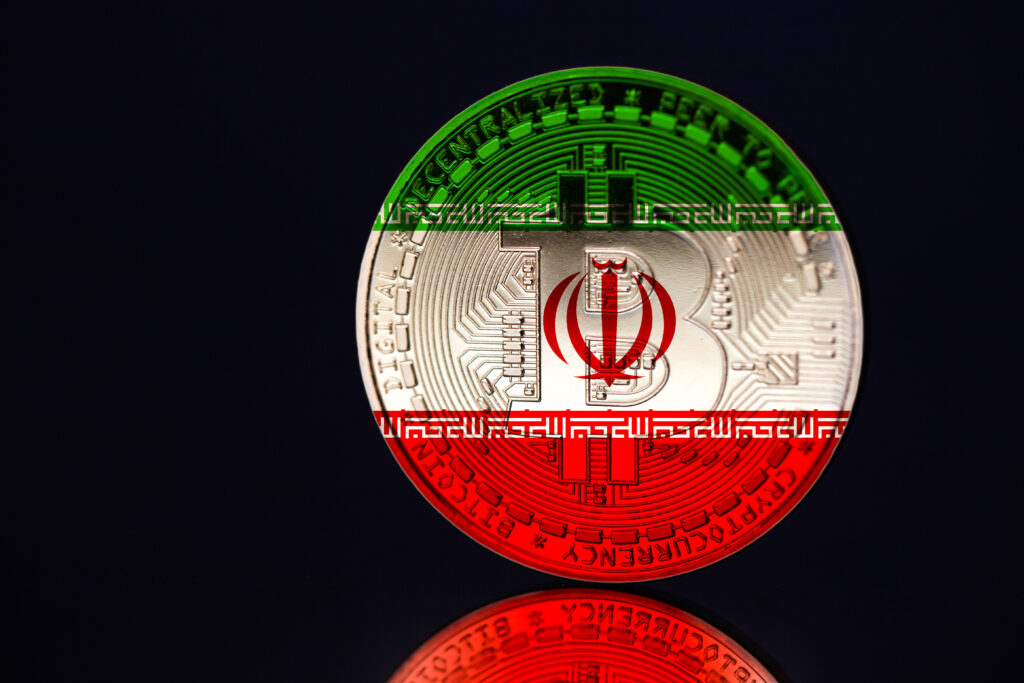
Iran and Cryptocurrencies: Long-Term Strategy to Bypass Sanctions
Iran’s current steps are not an isolated experiment. The country has been relying on the use of cryptocurrencies for some time, primarily in an effort to circumvent international sanctions and stabilize its economy.
Even before the escalation of the conflict earlier this year, for example, the analytics firm Elliptic reported that Iran’s central bank purchased the stablecoin Tether (USDT) worth approximately 500 million dollars. Further data from TRM Labs shows that between January and July 2025, approximately 3.7 billion dollars flowed through Iran’s cryptocurrency market.
At the same time, Iran’s currency, the rial, has been continuously weakening against the US dollar, increasing pressure to find alternative financial instruments.
Read Also: Monero – Cryptocurrency That Protects Your Financial Privacy
What It Means for Ordinary Investors
Iran’s considered move shows that cryptocurrencies are increasingly becoming the focus of geopolitics. It is no longer just an investment tool, but also a means of international trade and bypassing financial restrictions.
For ordinary investors, this means one thing: the cryptocurrency market will continue to be heavily influenced by global events. Price swings can be sharp and unexpected – and that is precisely why it is important to monitor not only technological developments but also political events.
The Strait of Hormuz may soon be more than just a symbol of the oil business – it could also become a place where a new chapter in the intersection of cryptocurrencies and the global economy is being written.
Don’t Miss: BITmarkets.com: Crypto Exchange Review That’s Rewriting the Rules

