



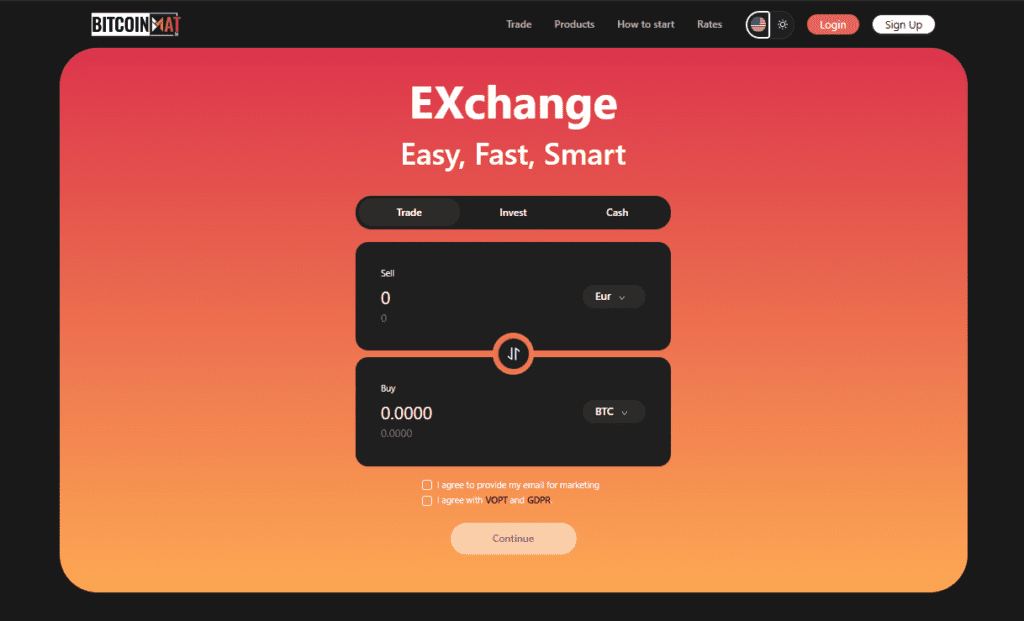
Cryptocurrency ATMs are among the services that are gradually making crypto accessible to ordinary users. They allow the purchase or sale of digital assets without the need to use a crypto exchange, set up an account, or deal with bank transfers. However, within the European Union, their operation has changed significantly in recent years due to MiCA (Markets in Crypto-Assets) regulation. This text offers an overview of how crypto ATMs work and explains how the Bitcoinmat.sk platform operates in a regulated environment.
Review content – Bitcoinmat.sk:
What is a crypto ATM and why is it interesting for users?
A crypto ATM is a self-service device that allows you to exchange cash for cryptocurrency or cryptocurrency for cash. Most often, this is Bitcoin, but sometimes other well-known cryptocurrencies are also available, depending on the operator’s offer. Its main purpose is to simplify access to crypto for people who prefer physical devices to online environments.
Unlike traditional ATMs, crypto ATMs are not part of the banking system. The operator acts as a crypto service provider – setting the exchange rate and fees, providing the exchange, and ensuring compliance with legal regulations.
Don’t miss: Fumbi Network
How to buy crypto via an ATM
Using a crypto ATM is usually simple. The user selects on the screen whether they want to buy or sell cryptocurrency, selects a specific currency, and enters their wallet address – either manually or using a QR code.
Identity verification depends on the amount of the transaction. For smaller amounts, the process is usually faster, while for larger amounts, more thorough identification is usually required in accordance with legislation. After inserting cash and confirming the transaction, the system sends the cryptocurrency to the blockchain network. The speed of crediting then depends on the specific network, not the ATM.
MiCA: New rules for crypto services in the EU
MiCA is a unified European framework for regulating cryptocurrency services. Its goal is to harmonize rules across member states, increase consumer protection, and strengthen oversight of the digital asset market. Crypto ATM operators are considered crypto service providers in this system.
In practice, this means that they must obtain a license, implement KYC (customer verification) and AML (anti-money laundering) processes, have control mechanisms in place, and be subject to regulatory oversight. MiCA thus reduces the previous inconsistency of rules and creates a clearer environment for the operation of these services.
You may be interested in: Bitcoin in its second year after halving
What Bitcoinmat.sk offers and why the MiCA license is important
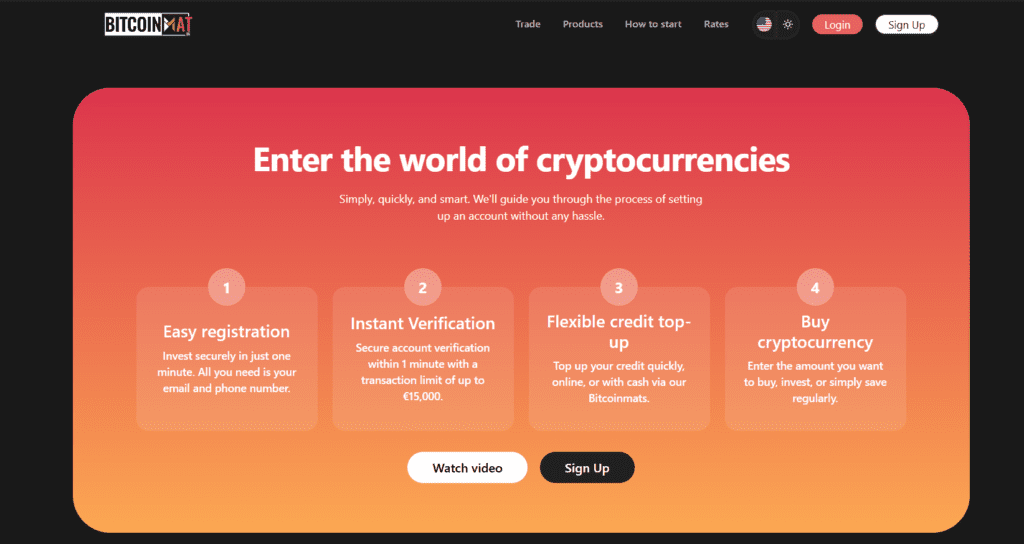
Bitcoinmat.sk operates a network of cryptocurrency ATMs in the Czech Republic and Slovakia and focuses on the availability of cryptocurrencies through physical devices. The service is primarily intended for users who prefer cash transactions or more personal contact with technology. The operation of ATMs is set up with regard to legislative requirements, including transaction limits and various levels of identity verification.
At the end of 2025, Bitcoinmat.sk obtained a license to provide cryptocurrency services under MiCA regulation. For customers, this means a higher degree of transparency and legal certainty—the operator must clearly inform them about the terms of service, fees, and associated risks. At the same time, however, it is important to remember that regulation alone does not eliminate market risk – cryptocurrencies remain volatile and the responsibility for decisions always lies with the user.
Summary
Cryptocurrency ATMs are a practical way to navigate the world of digital assets without complex online tools. MiCA regulation brings their operation into a clearly defined framework across the EU. Bitcoinmat.sk is an example of a service that has adapted to this development and operates as a regulated crypto service provider. For readers who want to get an overview of how crypto ATMs work, this text can serve as a factual and understandable introduction.
Read more: BITmarkets
Our platform rating


